
Are Cash Home Buyers Legit? What You Need to Know Before Signing Anything
Yes, legitimate cash home buyers exist and complete thousands of real estate transactions every year in California — but predatory wholesalers and scam operators are also active, and the two can look identical from the outside. The difference comes down to a handful of verifiable signals that any homeowner can check in under an hour. This guide walks you through exactly what separates a real cash buyer from one who will waste your time or worse.
You Saw a "We Buy Houses" Sign and Now You're Not Sure
You did not get here by accident. Maybe a yellow-and-black sign appeared on your corner. Maybe a postcard landed in your mailbox with your name handwritten on it. Or maybe a neighbor mentioned selling fast and you started researching, and now you are staring at websites that all look the same, making the same promises.
The skepticism you feel is completely reasonable. You are being asked to hand over one of the largest assets you own to a company you found through a yard sign or a Google search. That warrants some serious scrutiny.
Here is what most homeowners do not realize: the "We Buy Houses" industry is a wide tent. Inside it, you have genuinely funded local buyers who close deals with their own cash, have a track record you can verify, and treat sellers honestly. You also have wholesalers who are not buyers at all — they lock up your home under contract and then try to sell that contract to an actual buyer, often without telling you that is the plan. And on the fringes, you have outright scammers who collect personal information, tie up properties, or try to trick distressed homeowners into signing away equity.
Understanding which category you are dealing with before you engage is the most important thing you can do.
What Makes a Cash Home Buyer Legitimate?
A legitimate cash buyer has a simple, verifiable profile. They are not hard to identify once you know what to look for.
5 Green Flags of a Real Cash Buyer
- They can show proof of funds — A real buyer has liquid capital available. If you ask to see a bank statement or proof-of-funds letter and they deflect or stall, stop there.
- They use a licensed California title company — Every legitimate real estate transaction in California goes through a neutral third-party title company. The title company holds the funds, handles paperwork, and protects both sides. If a buyer wants to handle closing themselves or use an out-of-state escrow, that is a serious warning sign.
- They have a local presence and verifiable history — Check Google reviews, the Better Business Bureau, and the California Secretary of State's business registry. A real company has a real address, real reviews from real sellers, and has been operating long enough to have a track record.
- They make an offer before asking you to sign anything — You should receive a clear offer number before any paperwork. Legitimate buyers do not pressure you into a contract before presenting what they are willing to pay.
- They do not charge the seller any fees — Zero commissions, zero closing costs, zero processing fees. If a buyer tries to deduct "administrative fees" from your proceeds, walk away.
5 Red Flags of a Predatory Operator
- They ask you to wire money for any reason — Money flows TO you, not from you. A cash buyer never asks for upfront payment. Wire fraud in real estate is real, and the seller is always the one receiving funds, not sending them.
- Their offer seems impossibly high — A tactic called "bait and switch" involves quoting an inflated number to win your confidence, then dramatically reducing the offer right before closing when you have no time to shop around. Legitimate buyers make honest offers the first time.
- They pressure you to sign quickly without explaining the contract — You have every right to take the contract to your own attorney before signing. A real buyer will welcome that. A scammer will not.
- They cannot tell you who is actually buying your house — Wholesalers assign contracts to unknown third parties. If you ask "who will own my home after closing?" and you get a vague answer, you may be dealing with someone who does not yet have a buyer lined up.
- They disappeared after a previous offer — If you have been through this before and a "buyer" made an offer then went silent, you likely encountered a wholesaler whose assignment deal fell apart. That is not your fault, and it is not how legitimate buyers operate.
How Cash Offers Actually Work — and What You Net
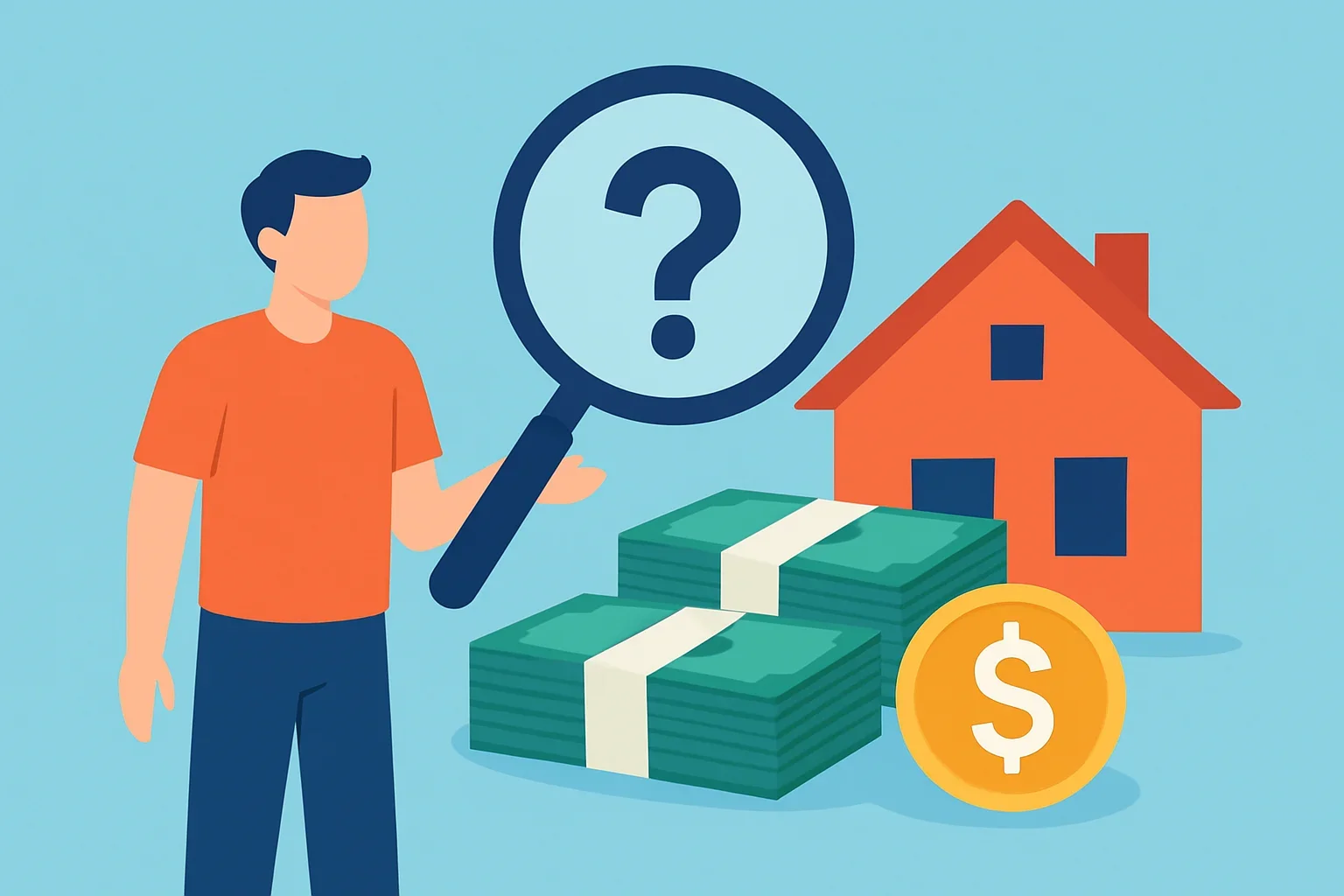
One of the most common objections homeowners have is straightforward: "Won't I lose too much equity?" It is a fair question, and it deserves an honest answer.
Cash offers are typically 70-85% of a home's after-repair market value. That discount sounds significant until you run the actual numbers on what a traditional listing costs.
| Cost Category | Traditional Listing | Cash Sale |
|---|---|---|
| Agent commission (5-6%) | $20,000-$24,000 on a $400K home | $0 |
| Repairs before listing | $10,000-$40,000+ | $0 |
| Staging and photography | $2,000-$5,000 | $0 |
| Holding costs (mortgage, taxes, insurance @ $2,500/mo x 4 months) | $10,000 | $0 |
| Buyer concessions (2-3%) | $8,000-$12,000 | $0 |
| Closing costs | $3,000-$6,000 | $0 |
| Total deducted from proceeds | $53,000-$87,000 | $0 |
On a $400,000 home, a homeowner who lists traditionally might net $313,000 to $347,000 after all costs — and that assumes the deal does not fall through. Roughly 25% of traditional home sales in California fall through due to buyer financing, inspection disputes, or appraisal gaps. Every collapsed deal means starting over, months later, at a lower price.
A cash offer at 78% of that same home's value would be $312,000 — with no deductions, no contingencies, and a closing timeline of 7-21 days instead of 45-90. That is not a bad deal. That is a different kind of deal, priced for speed, certainty, and zero hassle.
Key fact for Sacramento sellers: Cash sales accounted for approximately 32% of all U.S. home sales in 2024, according to industry data. This is not a niche or unusual transaction type — it is how nearly one in three homes change hands.
If you want to go deeper on how offers are calculated and what you can realistically expect to net, how much cash home buyers pay in Sacramento breaks down the math by condition and market in detail.
Should You Get Multiple Cash Offers?
Yes — and any legitimate buyer will tell you the same thing. Getting two or three cash offers is smart, and a company that discourages it is telling you something important about how they operate.
When comparing offers, look beyond the headline number. Compare:
- Net proceeds after any fees the buyer deducts
- Closing timeline and whether it actually fits your needs
- Contingencies — a clean cash offer has none; a financed offer does
- Proof that the buyer can actually close — ask for proof of funds from each
The cash home buyers near me pillar guide covers how to find and properly vet multiple local buyers in the Sacramento region, including what questions to ask before you agree to anything.
Is Selling Directly to a Cash Buyer Legal in California?
Completely. Selling your home directly to a buyer — without a real estate agent — is a standard transaction type in California. It is called a FSBO (For Sale By Owner) or direct sale, and it happens thousands of times per year across Sacramento, Elk Grove, Roseville, Citrus Heights, and the surrounding region.
The transaction still goes through a licensed title company, which is required by California law. The title company conducts a title search to reveal any liens or encumbrances, holds the funds in escrow, and disburses proceeds to you after closing. Neither you nor the buyer touches the money directly. This is the same mechanism used in every traditional real estate sale — a neutral third party protects both sides.
The California Department of Housing and Urban Development's CFPB housing counselor directory is a free resource if you want independent advice from a HUD-approved counselor before making any decisions.
What Selling Your Home to Ummah Homes Actually Looks Like
Ummah Homes is a local Sacramento-area cash buyer that has been helping homeowners throughout Sacramento, Rancho Cordova, Carmichael, North Highlands, Folsom, and surrounding communities sell without repairs, agents, or drawn-out timelines.
Here is exactly what the process looks like — no surprises:
Step 1: You call or fill out the form (2 minutes). Tell us a little about the property — we handle everything over the phone.
Step 2: We talk through your situation and gather the details we need to give you an accurate cash offer. We built a phone-based system after COVID that lets us make honest offers without needing to visit first.
Step 3: We present your offer on the call. No obligation, no pressure. It is just a number. You can take time to think about it, get other offers, or talk it over with family.
Step 4: If you want to move forward, we sign an agreement, and then schedule a quick visit to confirm what you shared over the phone. If everything matches — and it almost always does — the price stays the same.
Step 5: We close in as few as 21-24 days, or on whatever timeline works for you. We have done 7-day closes for sellers with urgent situations and 60-day closes for sellers who needed time to find their next place.
Funds are wired directly to you within 24-48 hours of closing, through the title company. You never need to clean, stage, or repair anything. You can leave behind whatever you do not want to take with us.
If you are ready to see what your home could sell for — no commitment, no fee, no obligation — sell my house fast and get a number in one conversation.
"*" indicates required fields
What Happens After You Fill Out the Form
- We call you within 24 hours to learn about your property and your situation
- On a second call, we walk you through our process, timeline, and present a fair cash offer — no pressure, no obligation
- If the offer works for you, we sign an agreement and schedule a visit to confirm the details
- Average closing: 21-24 days, but we close on your schedule
You are in control at every step. If the number does not work, you simply say no. If something changes after you have said yes, we will work through it together. We have a local office in Sacramento if you prefer to meet in person before deciding — though most sellers are comfortable doing everything over the phone.
Hundreds of homeowners across Sacramento have sold this way. The transaction is private — no MLS listing, no sign in your yard, no neighbors asking questions. Just a clean, direct sale handled the same way any real estate deal is handled, minus the friction.
If you want to know more about selling your house as-is in California, that guide covers what disclosure rules apply, what you can skip, and how condition affects what buyers will pay.
Frequently Asked Questions
Can a cash home buyer scam you out of your house?
Outright deed fraud is rare but real — it typically involves forged documents rather than a standard cash offer process. The best protection is using a licensed California title company for every transaction, which handles all document verification and funds. Never sign a deed or transfer document outside of escrow. A legitimate buyer will never ask you to do so.
How quickly can a legitimate cash buyer actually close?
A fully funded cash buyer with no contingencies can close in as few as 7 days in California. Most transactions close in 21-24 days to allow time for the title search and escrow processing. Sellers who need more time can request 30, 45, or 60-day closings — a real buyer will accommodate your schedule.
Do I have to accept a cash offer if I get one?
No. A cash offer is just a number presented for your consideration. You have zero obligation to accept it. You can take time to compare offers, consult with an attorney or family member, or decline entirely. Signing a purchase agreement is the commitment — not receiving the offer.
What happens to my existing mortgage if I sell for cash?
Your mortgage does not need to be paid off before the sale. The title company pays off the remaining balance from your sale proceeds at closing, then wires the difference to you. This is true for first mortgages, HELOCs, and second liens. Many sellers do not realize this — they think they need a zero balance before they can sell. You do not.
Are "We Buy Houses" companies the same as cash buyers?
Not always. Some "We Buy Houses" companies are direct cash buyers with their own capital. Others are wholesalers who find properties and assign their contracts to a third-party buyer — meaning they are not actually the one purchasing your home. Always ask who the legal buyer of record will be at closing, and verify they can show proof of funds.