
How to Sell a House in Probate in California (Without the Stress)
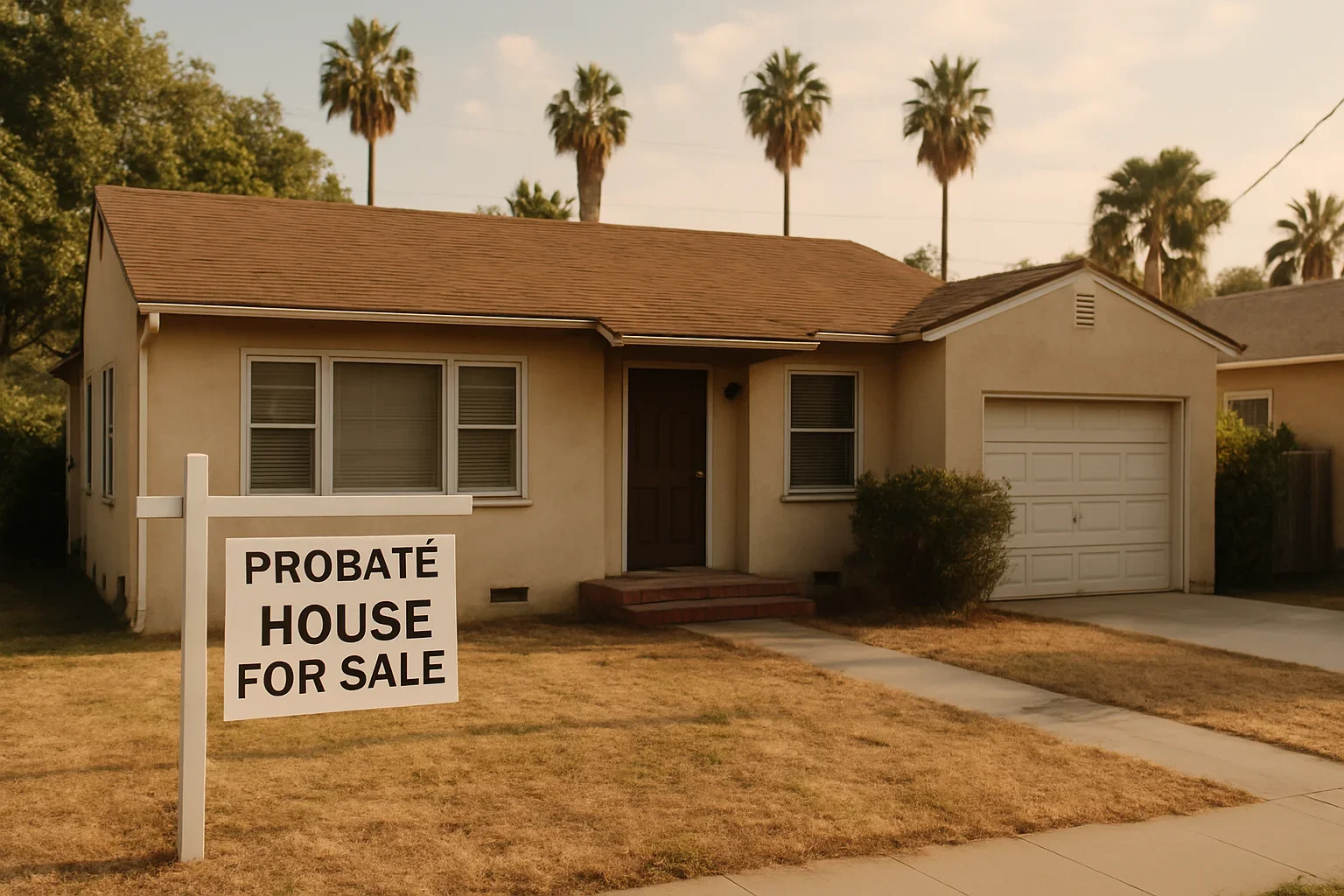
Selling a house in probate in California is legal, common, and entirely manageable — but it follows a specific legal process that most families have never navigated before. In California, most real property estates valued over $184,500 must pass through probate court before the home can be transferred or sold. Depending on the path you take, the sale can close in as little as 30 days or stretch to 12-18 months.
You Did Not Sign Up for This
You are grieving. Or you are exhausted from being the one who had to "handle things." Or you are caught between siblings who cannot agree on what to do with Mom's house.
Whatever got you here, you probably did not expect that selling a house after someone passes away would require court appearances, legal notices, and appraisals done by a state-appointed referee. Nobody explains this at the hospital.
The first thing to know: you are not stuck, and you are not alone. California families go through probate property sales every single day. Once you understand how the process works, it becomes far less overwhelming — and there are options that can shorten the timeline significantly.
If you are still in the early stages of understanding what you inherited, the broader guide on inheriting a house in California covers the full picture before you get into the mechanics of a sale.
What Probate Actually Means for the Home
When someone dies owning real property in California — unless that property is held in a living trust, in joint tenancy with right of survivorship, or has a recorded Transfer on Death deed — it typically must go through the probate process.
Probate is the legal mechanism that:
- Validates the will (or determines heirs if there is no will)
- Appoints an executor or administrator to manage the estate
- Notifies creditors and settles debts
- Transfers the remaining assets to the rightful beneficiaries
The home cannot legally be sold until the court authorizes the sale — with one important exception explained below.
Key California probate fact: A state-appointed probate referee appraises the property to establish its fair market value. Any accepted purchase offer must be at least 90% of that appraised value. This protects the estate from lowball deals.

Two Very Different Paths: IAEA vs. Full Court Confirmation
This is the distinction most people do not know exists, and it changes everything about how fast and smoothly the sale goes.
Path 1 — Independent Administration of Estates Act (IAEA)
If the will grants the executor "full independent authority" under the IAEA — or if the court grants it — the executor can sell the property without a court confirmation hearing. The executor still must:
- Give 15 days written notice to all heirs and beneficiaries
- Sell at or above 90% of the probate referee's appraised value
- Report the sale to the court afterward
No court auction. No overbid process. Sale closes like a standard real estate transaction. This path typically allows a sale to close within 45-90 days of letters testamentary being issued.
Path 2 — Full Court Confirmation (No IAEA)
If IAEA authority was not granted, or if any heir objects, the sale requires a court confirmation hearing. Here is where it gets more complex:
The overbid process: After an initial offer is accepted, the court publishes a notice of the sale. At the hearing, any member of the public can show up and overbid. The minimum overbid is the accepted offer plus 5%, plus $500. If someone overbids, a live auction begins in the courtroom.
This process is designed to maximize the estate's value, but it creates uncertainty for buyers and extends the timeline. Many financed buyers walk away because they cannot hold a rate lock through an unpredictable court hearing date. Cash buyers have a significant advantage here — no rate locks, no lender requirements, and no financing contingency to kill the deal.
Full court confirmation adds 2-4 months to the timeline on average.
The Real Timeline: What to Expect
| Stage | Typical Duration |
|---|---|
| Filing petition, notifying creditors | 4-8 weeks |
| Probate referee appraisal | 1-2 weeks after appointment |
| Listing and accepting an offer | 2-8 weeks |
| IAEA sale (with notice period) | 3-4 weeks after offer |
| Court confirmation sale (hearing + close) | 8-16 weeks after offer |
| Full probate timeline (end to end) | 9-18 months |
The home itself can often sell well before probate is fully closed. Proceeds are held by the title company or estate account until the court issues its final order.
What This Means for the Family: The Costs Nobody Mentions
Every month the house sits during probate, the estate is paying:
- Property taxes
- Homeowners insurance (which may lapse or exclude coverage for vacant properties after 30-60 days)
- Utilities to prevent pipe damage or code violations
- Basic maintenance, landscaping, and security
For a Sacramento-area home, that carrying cost typically runs $1,200-$2,500 per month depending on the mortgage balance, taxes, and condition. Over a 12-month probate with a traditional listing, that can quietly consume $15,000-$30,000 in estate assets before a single heir receives anything.
There is also the question of siblings. If two or three family members are co-executors or co-beneficiaries and they cannot agree on price, timing, or which agent to use, the process grinds to a halt. Every month of disagreement costs the estate real money. This is one reason cash sales are so common in probate — a single clean offer gives everyone a concrete number to respond to, rather than months of abstract debate.
If you are navigating a more complicated inherited property situation with multiple parties involved, the guide on selling an inherited house goes deeper on the co-ownership and family dynamics side.
Does the Executor Have to List with a Real Estate Agent?
No. The executor has a fiduciary duty to get a fair price for the estate — not to use any specific method of sale.
A direct cash sale to a qualified buyer like Ummah Homes is legally valid in a California probate, provided:
- The offer meets the 90% threshold of the probate referee's appraisal
- Proper notice is given to heirs (under IAEA) or court confirmation is obtained
- The title company facilitates the close in the normal way
Cash buyers are actually well-suited to probate sales because they can wait for court timelines without financing falling through, they have no inspection contingencies that can unravel the deal, and they are experienced with the paperwork.
For a broader look at what selling without an agent involves in California, how to sell a house in California covers the full picture.
A Word on the Stepped-Up Basis
If you are wondering about capital gains taxes on the sale, there is good news specific to inherited property: California and federal law both allow a stepped-up cost basis for inherited real estate. This means the property's tax basis resets to its fair market value at the date of death — not what the original owner paid decades ago.
In practical terms, if the home appraised at $450,000 at date of death and you sell for $460,000, you owe capital gains tax only on the $10,000 gain — not on the full appreciation from when the original owner bought it for $80,000 in 1985.
This is significant, and it is worth a 30-minute conversation with a CPA before closing. It is not something to guess at.
Key fact: The stepped-up basis is one of the most valuable tax benefits available to heirs. Many families leave significant money on the table by not understanding this before they sell.
What Happens When You Reach Out to Ummah Homes
You do not need to have everything figured out before calling. Families at every stage of probate — from "we just filed the petition" to "the court date is next month" — have worked with Ummah Homes to simplify the sale.
Here is exactly what happens:
1. Phone call first. We gather the details about the property over the phone. No visit, no pressure, no one coming to the house. We have built a process since COVID that lets us give accurate cash offers based on what you share with us — condition, location, situation.
2. We give you a number. You will have a clear cash offer on that call. If the number does not work for the estate, you simply say no. There is no paperwork to sign, no obligation, no awkward follow-up.
3. If you want to move forward, we sign an agreement. After that, we schedule a visit to confirm what was discussed over the phone. If everything matches, the price stays exactly the same.
4. We work with your timeline — and your attorney. Whether you are under IAEA and can move quickly, or waiting for a court confirmation hearing, we work around the legal calendar. We are comfortable with probate paperwork and have closed transactions at both the IAEA and full confirmation stage.
5. Closing happens through a licensed title company. A neutral third party handles all funds and paperwork — the same process used in any California real estate transaction. The estate receives the funds. Neither side touches money directly. This protects the estate.
6. Leave whatever you want behind. Furniture, personal belongings, decades of accumulated items — you do not need to clean out the house before closing. We handle everything after. This is a major relief for families managing an estate from out of state or dealing with a home full of a lifetime's worth of possessions.
If you want a no-obligation starting point to understand what the home could sell for, reaching out takes about two minutes. Ummah Homes has worked with Sacramento-area families through probate sales in Sacramento, Elk Grove, Rancho Cordova, Folsom, Roseville, and throughout the greater region.
To sell inherited house fast without the months of carrying costs and court uncertainty, the first call is always free and there is never any pressure.
"*" indicates required fields
What Happens After You Fill Out the Form
- We call you within 24 hours to learn about the property and your timeline
- On a second call, we walk you through the process and present the cash offer — no obligation, no pressure
- If the offer works, we sign an agreement and schedule a confirmation visit
- Average close: 21-24 days from agreement — but we work on the estate's legal timeline, not ours
- Proceeds wired within 24-48 hours of closing
You are in control at every step. If something comes up, you can talk to us and we will work through it. If the number does not work, you say no and there is no awkward conversation.
For reference on what the full real costs of a traditional sale look like versus a direct cash sale, the real costs of selling your house in Sacramento breaks down every line item with specific numbers.
Frequently Asked Questions
Can you sell a house while probate is still open in California?
Yes. The sale of real property can happen during probate — the proceeds simply go into the estate account and are distributed when probate closes. Under IAEA, a sale can often close within 45-90 days of the executor receiving their letters. Under full court confirmation, add 2-4 months for the hearing process.
Does the executor need permission from all heirs to sell the house?
Under IAEA, the executor must give 15 days written notice to all heirs and beneficiaries, but unanimous approval is not required. Heirs have the right to object, and if an objection is filed, the sale may require court confirmation. An estate attorney can advise on the specific authority granted under the will.
What if the house needs major repairs — does that affect the probate sale?
The probate referee appraises the home in its current as-is condition. The 90% threshold applies to that appraised value. If the home is in poor condition, the appraisal will reflect that, and a cash buyer offering 90%+ of the as-is appraisal is a legally valid path. The estate does not need to make repairs before selling.
How is the offer price determined for a probate home in California?
A cash buyer's offer reflects the home's after-repair value, minus estimated repair and renovation costs, minus a reasonable margin. In probate, this must also meet the 90% floor of the probate referee's independent appraisal. If the two numbers do not align, the offer can be adjusted. The probate referee's appraisal is the legal floor, not the ceiling.
What if siblings disagree about selling?
This is one of the most common delays in probate. If co-beneficiaries cannot agree, the executor still has fiduciary authority to move forward under IAEA (with proper notice). If disagreement continues, a partition action through the courts is the legal remedy — but it is costly and slow. A concrete cash offer often resolves family disagreements faster than months of abstract discussion.
Can Ummah Homes buy a house before probate is even filed?
We can begin the conversation and prepare an offer at any stage. The actual sale cannot close until the executor has legal authority (letters testamentary or letters of administration) and the probate steps are complete. We work with estate attorneys regularly and can coordinate timing so the sale is ready to close as soon as the court process allows.