
How to Sell a House With Code Violations in California
You can sell a house with code violations in California — you do not need to fix anything before selling. Cash buyers purchase properties as-is, including homes with open permits, unpermitted additions, and active code enforcement notices. The key is knowing your disclosure obligations and understanding which type of buyer can actually close.
You Just Found Out About Code Violations. Here Is What That Moment Feels Like.
Maybe the county sent a notice. Maybe a contractor you hired to fix something else pointed it out. Maybe you inherited the house and had no idea the previous owner converted the garage without a permit or added a back room that was never inspected.
Whatever happened, you are now sitting with a problem that feels bigger than it is.
Code violations make most homeowners freeze. The word "violation" sounds like a legal trap. The assumption is: fix it first, THEN sell. But that assumption costs people tens of thousands of dollars and months of their lives — often unnecessarily.
Here is what most homeowners in Sacramento and the surrounding area do not know: the path forward depends entirely on what type of buyer you are selling to, not on whether the violations exist.

What Counts as a Code Violation in California?
Code violations cover a wide range of issues, and not all of them are equal.
Common violations seen in Sacramento-area homes:
- Unpermitted room additions, garage conversions, or ADUs built without permits
- Electrical work done without pulling permits (common in older Arden-Arcade and North Highlands homes)
- Plumbing modifications that were never inspected
- Structural changes made after the original build
- HVAC systems installed by unlicensed contractors
- Zoning violations (running a business out of a residential property, illegal lot splits)
- Active code enforcement liens placed by the city or county
- Fire code issues, including missing smoke detectors, improper egress windows, or blocked exits
Some of these are cosmetic headaches. Others — active enforcement liens, structural violations, or work that created safety hazards — are more complex. But even the serious ones are not automatically deal-killers. They just change who your best buyer is.
What California Law Requires You to Disclose
This is the part sellers most often get wrong, and it is important to get right.
California requires sellers to complete a Transfer Disclosure Statement (TDS) on virtually every residential sale. This includes cash sales. You are legally required to disclose any code violations, unpermitted work, or open permits that you know about.
Key fact: You are not liable for issues you genuinely did not know existed. But once you know, you must disclose. Failing to disclose a known violation can expose you to lawsuits after closing.
The good news: disclosure does not prevent you from selling. It protects you legally and sets honest expectations with buyers. A cash buyer who buys properties as-is expects disclosures. They are not surprised by violations. They price them in and move forward.
Why Traditional Buyers Cannot Close on Most Violation Properties
This is the core problem that sends sellers into repair mode unnecessarily.
When a buyer is getting a mortgage, their lender orders an appraisal. The appraiser works for the bank, not the buyer. If the appraiser flags unpermitted additions, code violations, or open permits, the lender will often:
- Require the violations to be corrected before funding
- Reduce the appraised value, which can collapse the deal
- Decline to fund the loan entirely
In Sacramento County, retroactive permit costs for unpermitted work can run $5,000 to $25,000 or more depending on the scope. A converted garage or added bedroom might require tearing open walls for inspection, bringing work up to current code, and paying city fees — all before a financed buyer can close.
That is why code violation properties have a much higher fall-through rate in traditional sales. Estimates suggest 60-70% of financed deals collapse when significant unpermitted work is discovered during inspection or appraisal. You can spend months on the market, reduce your price twice, and still end up with no sale.
Your Three Real Options — Laid Out Honestly
| Option | Timeline | Out-of-Pocket Costs | Certainty |
|---|---|---|---|
| Fix violations, then list with agent | 3-9 months | $10,000-$50,000+ | Low — financed deals still fall through |
| List as-is with agent, disclose violations | 2-6 months | Agent commission (5-6%), price reductions likely | Medium — depends on buyer pool |
| Sell as-is to a cash buyer | 21-24 days | $0 | High — no financing, no inspection contingencies |
Option 1 — Fix and list: Makes sense if you have cash for repairs, time to wait, and the violations are minor. For major structural or permit issues, the cost often exceeds the price premium you would gain. On a $450,000 Sacramento home, a 5-6% commission alone is $22,500-$27,000 — before factoring in repair costs, staging, carrying costs, and price reductions.
Option 2 — List as-is with an agent: Possible, but your buyer pool shrinks significantly. Most financed buyers cannot purchase a home with active violations or unpermitted work. You are essentially fishing for cash buyers through a process designed for financed buyers, while paying agent commissions on the back end.
Option 3 — Sell directly to a cash buyer: Eliminates the financing risk entirely. A legitimate cash buyer like Ummah Homes factors the violations into the offer upfront. You do not repair anything, you do not pull permits, and you do not spend months wondering if the deal will fall through at the last minute.
"But Won't I Lose Too Much Equity Selling As-Is?"
This is the objection that keeps sellers in repair mode longer than they should be.
Run the actual math first. Take your estimated market value if the house were fully repaired. Then subtract:
- Cost to remediate violations (permits, contractors, inspections): $15,000-$40,000 for a typical Sacramento property
- Agent commission: $22,500-$27,000 on a $450K sale
- Carrying costs while repairs are done and the house sits on market: $2,500-$4,000/month (mortgage, taxes, insurance)
- Price reductions if violations are discovered during buyer inspections: common 2-5% reductions
- Probability of deal collapse and starting over
Many sellers who do this math honestly discover the cash offer nets them the same or more — without the risk, the wait, or the out-of-pocket expense.
The offer reflects the house as it stands today, not what you imagine it could be after months of work. That is not a lowball. That is an honest number.
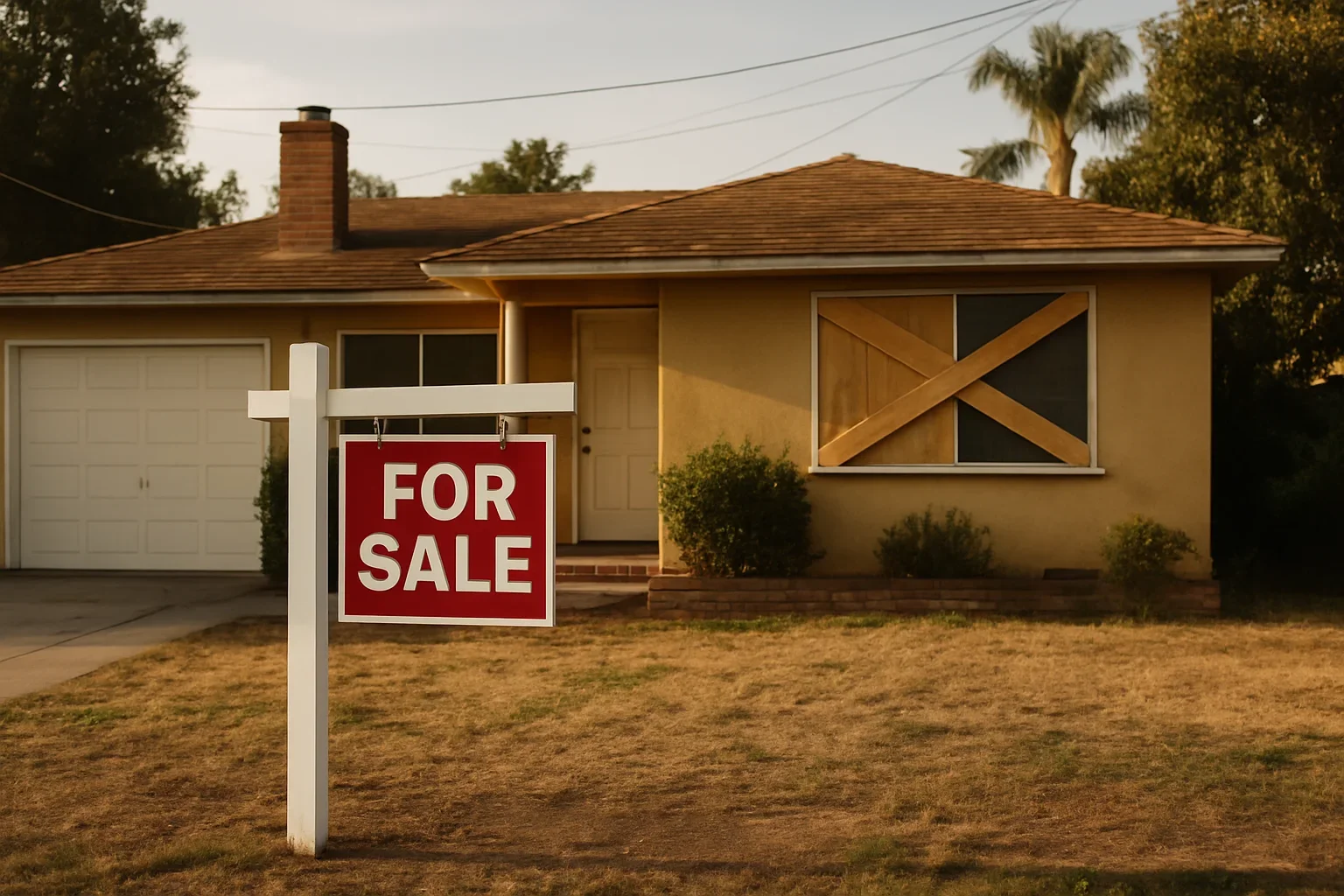
Code Violations That Often Come With Fire and Water Damage
If your property has code violations alongside fire or water damage — which is common in older Citrus Heights, Rancho Cordova, and Carmichael homes — the issue compounds quickly.
Homeowners who attempted DIY repairs after a fire or flood sometimes created unpermitted work in the process. Water damage remediation done without licensed contractors may have triggered building code issues. In some cases, the original damage exposed pre-existing violations that had been hidden behind walls for years.
These layered situations are exactly why financed buyers walk away. A cash buyer handles all of it together. For a deeper look at selling with fire or water damage specifically, this guide on sell house with fire damage covers that territory in detail.
What Happens to the Code Violation After the Sale?
The violation transfers with the property. You are not "getting away" with anything — the new owner takes responsibility for resolving it with the city or county after closing. A cash investor who buys properties as-is understands this. They budget for it, they have experience navigating code enforcement, and they take that burden off your hands.
For sellers, the relief of not managing a months-long permit process — while also trying to live your life — is significant. You are not responsible for what happens to the property after the keys change hands.
How the Process Works at Ummah Homes
If you are thinking about exploring a cash offer, here is what actually happens — no surprises.
1. You call or fill out the form below.
Takes about two minutes. You share basic information about the property and the violations you are aware of.
2. We have a phone conversation.
We gather everything we need over the phone to give you an accurate offer. We do not visit the property first. Since COVID, Ummah Homes built a system that lets us make accurate offers based on what sellers share with us directly — no walkthrough required upfront.
3. We give you a cash offer on the phone.
No obligation. No pressure. Just a number you can think about, compare, and say yes or no to.
4. If you accept, we sign an agreement — then we schedule a visit to confirm details.
The visit after agreement is simply to confirm what you told us about the property. If everything matches, the price stays the same. The only time anything changes is if there is something significant you were not aware of — a hidden foundation issue, for example.
5. We close on your timeline.
Our average closing is 21-24 days, but you choose the date. If you need 45 days, or 60, or 10 — we work with your schedule.
You do not need to clean the house, remove belongings, or deal with anything you do not want to deal with. Leave it as it is. We handle the rest.
Ready to see what your property could sell for?
"*" indicates required fields
What Happens After You Submit
- We call you within 24 hours to learn about your property and the situation
- On a second call, we walk you through the process, timeline, and present a fair cash offer — no pressure, no obligation
- If the offer works for you, we sign an agreement and schedule a visit to confirm what we discussed
- We close — funds are wired to you through a licensed title company, the same neutral third party used in any California real estate transaction
You stay in control at every step. Saying no is always an option. If something changes after you have said yes, we talk through it — no awkward pressure, no locked-in corners.
For a sell my house as-is fast experience that handles violations, damage, and everything in between, Ummah Homes has been buying properties across the Sacramento region — including Elk Grove, Folsom, Antelope, Orangevale, and West Sacramento — from homeowners in exactly your situation.
Frequently Asked Questions
Do I have to fix code violations before selling in California?
No. California law does not require sellers to repair code violations before selling. You are required to disclose known violations on the Transfer Disclosure Statement, but you can sell the property in its current condition. Cash buyers and investors regularly purchase homes with open permits, unpermitted additions, and active code enforcement notices without requiring repairs first.
Can a house with unpermitted work be sold in California?
Yes. Unpermitted work must be disclosed on the TDS, but it does not legally prevent a sale. The challenge is buyer financing — most lenders will not fund a loan on a property with significant unpermitted work. Cash buyers are not subject to lender requirements, which is why they can purchase these properties where financed buyers cannot.
What happens to a code violation lien when I sell?
Code enforcement liens attached to the property are resolved at closing through the title company. The amount owed is deducted from your sale proceeds — you do not need to pay it off separately before selling. The title company handles this as part of the closing process.
How does California's Transfer Disclosure Statement work for violations?
The TDS is a standardized California form that sellers must complete disclosing all known material facts about the property. This includes known code violations, unpermitted additions, open permits, and past work done without inspections. You are legally protected for issues you genuinely were not aware of, but anything you know must be disclosed. A real estate attorney can review your disclosures if you have concerns.
Will retroactive permits solve the problem before listing?
Sometimes, but the process is expensive and unpredictable. Retroactive (as-built) permits require inspections that may require opening walls or ceilings to verify work meets current code standards — which could be significantly stricter than when the work was originally done. The California Building Standards Commission updates codes regularly, meaning work done 10-15 years ago may require substantial upgrades to pass today. For most sellers, the cost and timeline make a direct cash sale the more practical option.
For more on navigating property damage, unpermitted work, and complex sale situations in the Sacramento area, the California Department of Housing and Community Development publishes guidance on building code standards and compliance that homeowners may find useful when understanding their disclosure obligations.